Rituals of Kinship: Ancestors, Memory, and More-Than-Human Relations in Anna Maskava’s Work
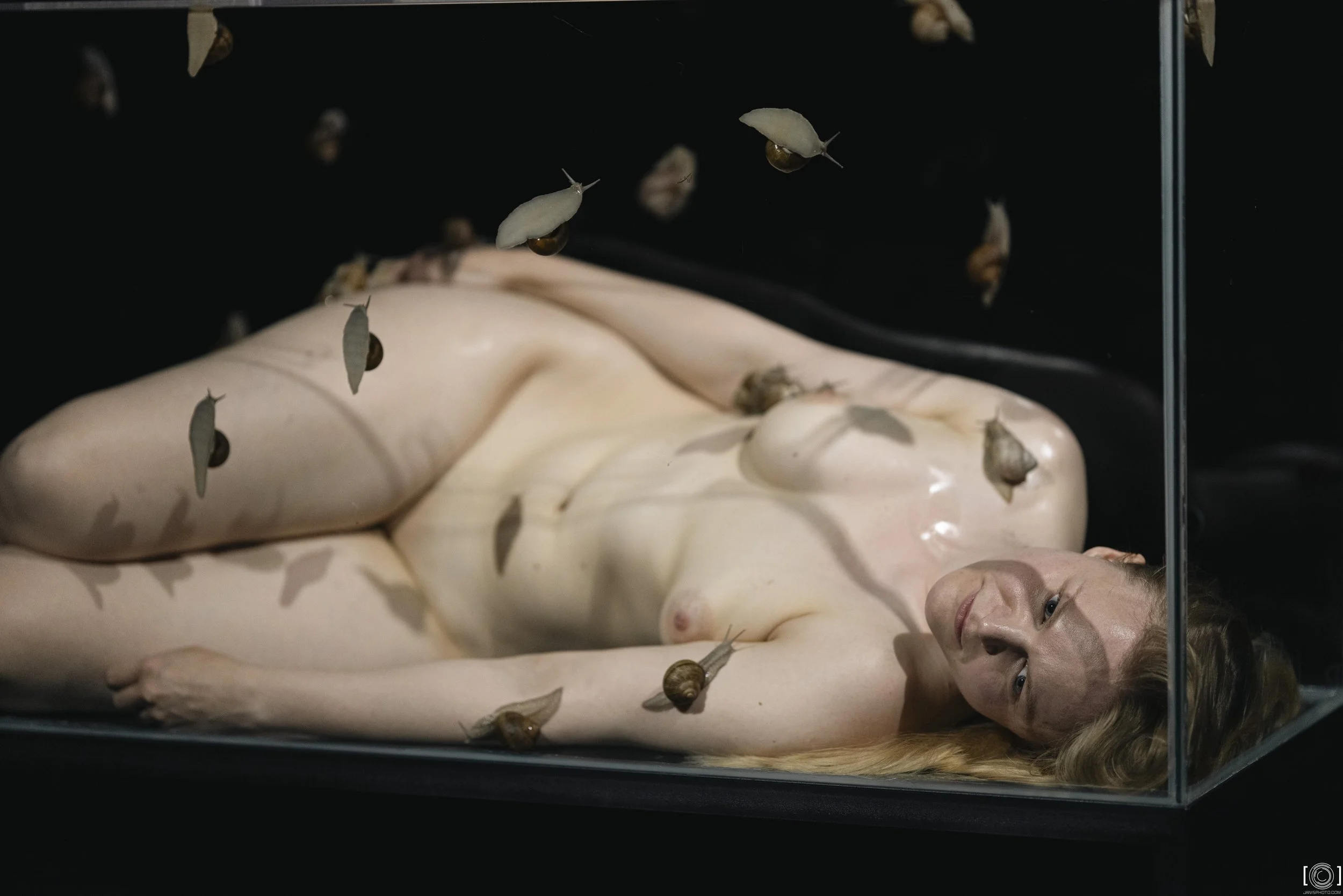
Anna Maskava, Bare Life, 2025. Performance presented at the Cēsis Art Festival. Photo by Jānis Porietis
The article “Rituals of Kinship: Ancestors, Memory, and More-Than-Human Relations in Anna Maskava’s Work” examines the artistic practice of Latvian artist Anna Maskava (b. 1990), integrating autobiographical, genealogical, and interspecies dimensions of kinship. Drawing on studies of autobiography, memory, and ritual, as well as posthumanist theory, the article explores how Maskava transforms personal experience, generational inheritance, and relationships into performative rituals of kinship. Through analyses of works such as 1997, Milk and Vodka, Expelled from the Kin, Ancestral Body, Animacy, Bare Life, and Ancestor II / 65 kg of the Past, the author demonstrates how the concept of kinship emerges as a dynamic, relational network of memory. In Maskava’s autobiographical works, memories of childhood and adolescence come to the fore; in works engaging with family history, generational memory is activated through the method of fabulation; meanwhile, her interspecies performances are grounded in modes of co-existence characterized by vulnerability, attentiveness, and material agency. Situating Maskava’s practice within the broader context of contemporary art in Latvia and acknowledging the author’s curatorial and pedagogical engagement in the artist’s professional development, the article argues that Maskava’s works reconceptualize kinship as an embodied, material, and more-than-human relational practice, revealing a close affinity with posthumanist ideas.